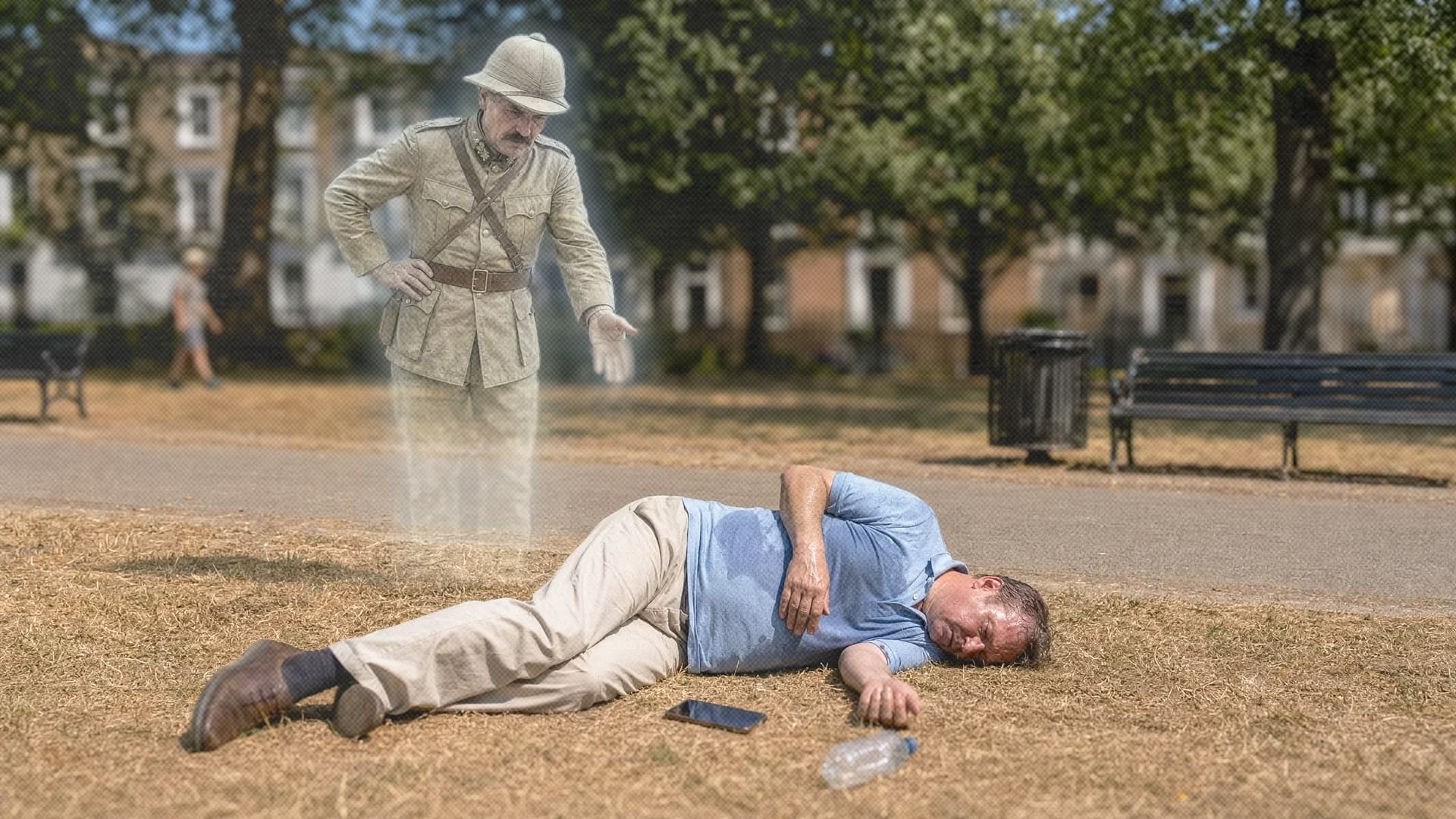
John Dumberton, 50, collapsed dead after walking 300 metres from his home to a local park in London. According to the British coroner’s report, which noted that temperatures did not exceed 34°C, the cause of death was “extreme heat.”
Dumberton was one of more than 20,000 Europeans killed by this summer’s heatwave - a figure exceeding the total number of British soldiers who invaded, administered, lived in, and enjoyed the sunshine of the Indian subcontinent during the peak of its imperial years.
While modern Europeans melt at temperatures their forebears considered pleasant, historical records point to a very different physiology in the coloniser of old. The ghost of John’s grandfather - a military commander who stormed six cities in southern India in full uniform, carrying his kit and heavy artillery to neutralise the threat posed by thousands of locals under the direct midday sun - said:
“I remember John as a child; he was very fragile. A minor lashing on the backside was enough to make him cry and go looking for his mother.”
European-affairs specialist Omar Bayader confirmed that the new European is not like the old European: “They were men who could endure heat, pressure, and carrying out an extermination of a whole tribe without needing therapists or developing PTSD. Today’s generation is weak, fragile, and so obsessed with its appearance that you can no longer find a man in Europe and be sure he is a man.”
As for the millions who have died worldwide from heatwaves and the effects of global warming, our researcher was unable to obtain any accurate or confirmed information because the subject is not important.